


Space Seed Holdings backs Japan's first microalgae satellite mission as Aoba prepares for late-2026 launch
Space Seed Holdings Co., Ltd. (SSHD), a Tokyo-based deep-tech venture builder, is positioning itself at the center of a growing Japanese space-biology ecosystem as preparations advance for the launch of “Aoba,” a small satellite slated to fly microalgae cultivation experiments into low Earth orbit in late 2026.
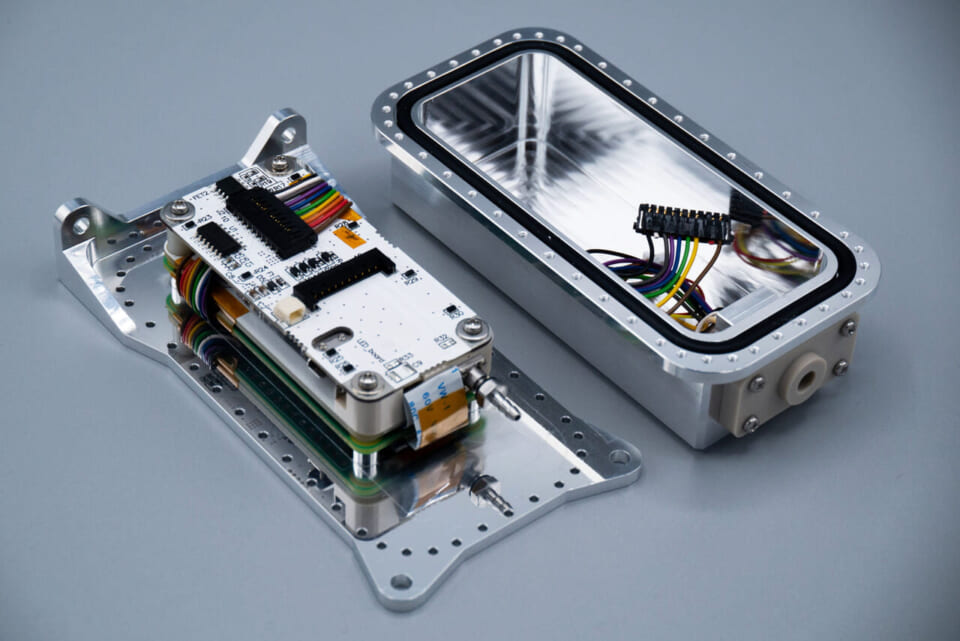
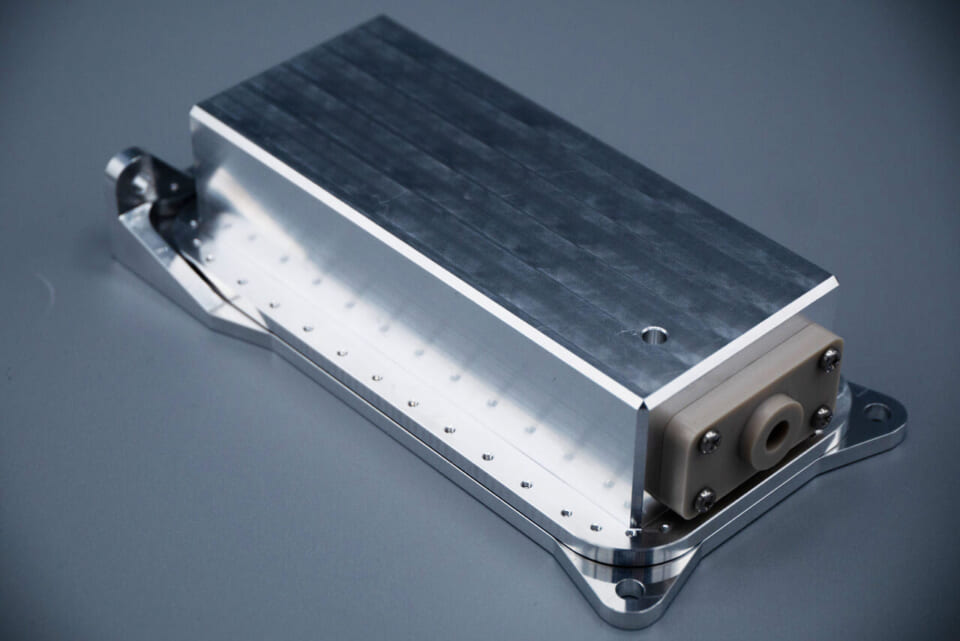
Aoba — billed as the first satellite developed by a private-sector company headquartered in Japan’s Tohoku region — is being built by Sendai-based ElevationSpace Inc., a Tohoku University spinoff. Onboard, the satellite will carry a compact cell-cultivation module jointly developed by IDDK Inc., Takasago Electric Industry Co., Ltd. and euglena Co., Ltd., paired with IDDK’s lensless semiconductor imaging device known as MID (Micro Imaging Device). The payload will observe how microalgae, including the species Euglena gracilis, behave and proliferate under microgravity, before returning samples to Earth for genetic and compositional analysis.
The mission gained renewed strategic significance this month after Tokyo-based research firm Leave a Nest Co., Ltd. announced on May 7 that it had taken over euglena’s space-related development assets, contracts and intellectual property. Operational responsibility for the on-orbit research program now sits with Spacenome Lab Inc., a Leave a Nest group company that was renamed from NEST EdLAB in March 2026 to reflect its expanded focus on space life sciences and education.
For SSHD, the Aoba mission is more than a portfolio item. The company’s founder and chief executive, Kengo Suzuki — who co-founded euglena Co. and led the world’s first outdoor mass cultivation of Euglena gracilis in 2005 — was appointed co-director of Spacenome Lab in March, alongside Itsuko Kawashima. SSHD took an equity stake in the institute at the same time. Suzuki also serves as team director of the Algae Resource Upcycling Research Team at RIKEN’s TRIP-BZP program, giving him a rare position spanning ground-based fundamental research, terrestrial industrial cultivation and now orbital experimentation.
SSHD, founded in January 2024 under the mission statement “turning science fiction into non-fiction,” operates three business domains: Space x Fermentation, Space x Medicine and Space x Aquaculture, the last positioned as a fully closed-loop, ultra-efficient food supply system. The company’s flagship business unit, SPACE LAB., launched in March 2026 with a mandate covering orbital and ground-based simulated research using ultra-small experimental modules, space-related intellectual property, and an experiment-automation initiative called SpaceAgent that applies large language models to laboratory workflows. Aoba’s onboard cultivation module is, in effect, a live demonstration of the architecture SPACE LAB. has been designed to support.
“Aoba is the kind of mission our entire thesis points toward,” said Kengo Suzuki. “Microalgae are arguably the shortest path to a closed-loop food supply system that works both on Earth and off it. Watching them grow in orbit, recovering them, and reading what microgravity has done to their genes and metabolites — that is exactly the work that turns a science-fiction premise into measurable engineering.”
The company is also linking the mission to its Fermentation and Longevity Fund, a strategy centered on the intersection of fermentation, space and human longevity. Compositional shifts in microalgae under microgravity — particularly in antioxidant pathways and lipid profiles — are of direct interest to the company’s ongoing longevity research.
Aoba is configured as the first flight of ElevationSpace’s ELS-R series, a roughly one-meter-class platform designed to operate for about six months in low Earth orbit before a re-entry capsule returns payloads to Earth. ElevationSpace, IDDK, Takasago Electric and euglena announced their joint development of the cultivation module in August 2023; IDDK separately demonstrated its imaging unit aboard ATMOS Space Cargo’s PHOENIX-1 re-entry capsule, which flew as a SpaceX Falcon 9 rideshare in April 2025.
A parallel education program, the Tsunagu Research Project, is being run by Spacenome Lab to give junior and senior high school students in Asia direct involvement in the satellite’s research design — a structural choice that ties the mission to long-term workforce development for Japan’s space-biology sector.
Space Seed Holdings embraces the cluster of partners around Aoba — Leave a Nest, ElevationSpace, IDDK, Takasago Electric and euglena — as key collaborators rather than competitors. The company’s baseline stance toward IDDK, in particular, focuses on cross-licensing and joint applications rather than patent avoidance, treating the firm as a long-term partner in space bio-experimentation infrastructure.
Looking toward the future, the company’s long-term vision extends to 2040, the year by which SSHD aims to establish the fundamental technologies needed for sustained human habitation in space.
“We are not promising 2040 will be the year people live in orbit,” Suzuki explained. “We are saying that the food, the fermentation and the biology required to make it credible should be ready by then. Aoba is the first mile.”
About Space Seed Holdings
Space Seed Holdings Co., Ltd. is a Tokyo-based deep-tech venture builder founded in January 2024 by Kengo Suzuki, co-founder and former chief technology officer of euglena Co., Ltd. The company operates three business domains — Space x Fermentation, Space x Medicine and Space x Aquaculture — under the mission statement “turning science fiction into non-fiction” and the long-term goal of assembling the technologies required for human space habitation by 2040. Its core business unit, SPACE LAB., launched in March 2026, focused on orbital and simulated research with ultra-small experimental modules, space-related intellectual property and the SpaceAgent experiment-automation initiative. SSHD operates the Fermentation and Longevity Fund and has a subsidiary, Regenesome Inc., as well as an equity stake in Spacenome Lab Inc. Website: https://ss-hd.co.jp/