


Space Seed Holdings closes spring lecture series at online research school, pointing 2040 vision back at the next generation
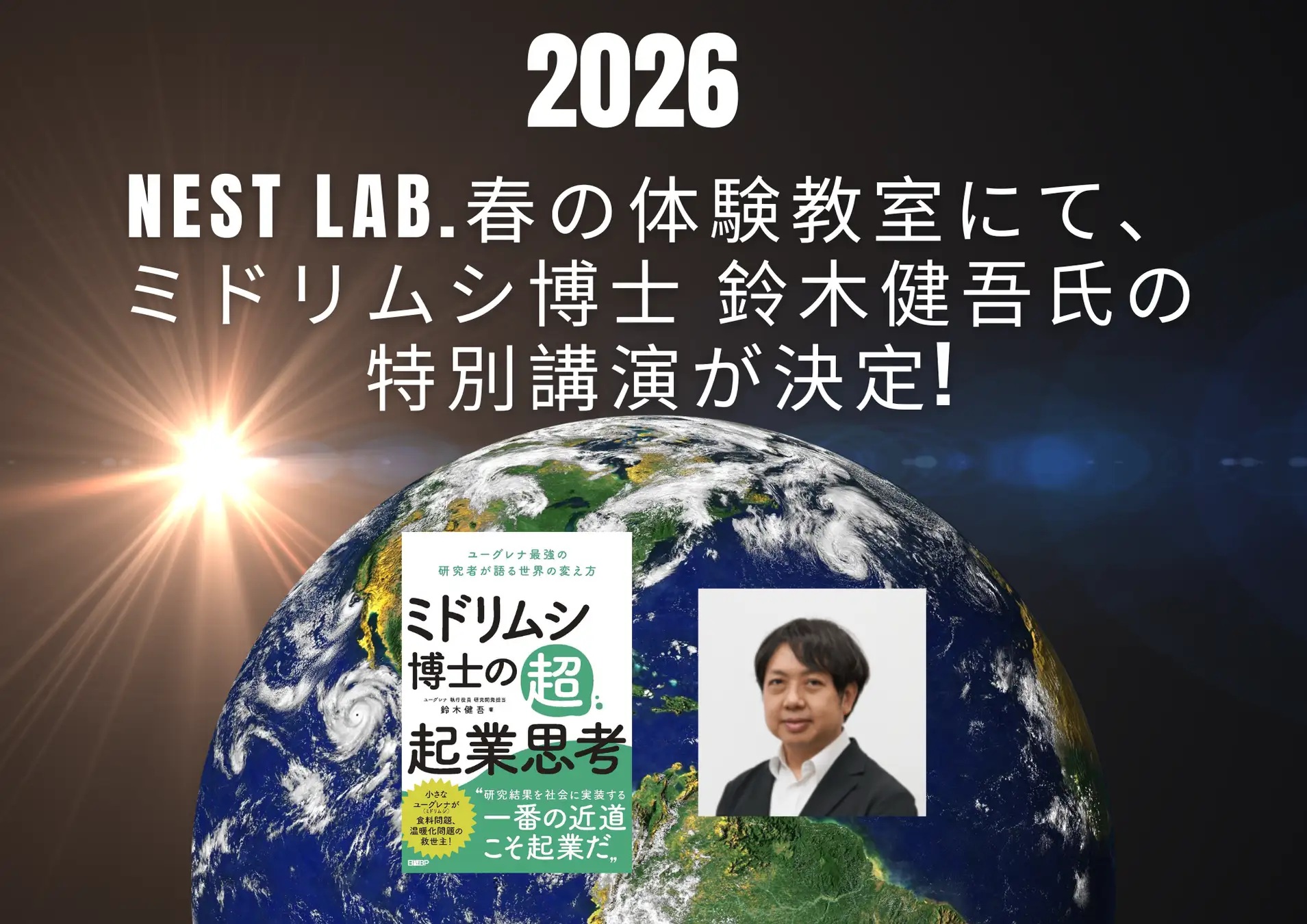
Space Seed Holdings Inc. (SSHD), a Tokyo-based deep-tech venture builder, has completed a three-date spring lecture series at NEST LAB., an online research school for elementary and junior high school students, with chief executive Kengo Suzuki appearing as featured speaker on March 29, April 5 and April 26. The series — first announced on March 20 by the school’s operator, then trading as NEST EdLAB Inc. and since renamed Spacenome Lab Inc. — was delivered as an integrated component of SSHD’s broader investment in the research talent pipeline that the company’s 2040 space-habitation roadmap will ultimately depend on.
NEST LAB. is run as an online research school designed to develop exploratory thinking in younger students through direct exposure to working scientists and live research themes. Sessions are delivered remotely and organized around four majors: Knowledge Engineering, Robot AI Technology, One Earth Nature, and Sustainable Science. The spring program ran two thirty-minute slots per day — 11:00 and 14:30 Japan Standard Time — across the three dates, opening each to students and guardians enrolled in any of the four majors. Registration and program detail were hosted at https://school.lne.st/special/.
For SSHD, the appearance is the first sustained outward-facing education engagement since the company took an equity stake in Spacenome Lab in March 2026 and Suzuki was appointed co-director of the institute alongside Itsuko Kawashima. Spacenome Lab — which assumed operational responsibility for euglena Co., Ltd.’s space-related research assets earlier in the year — now sits inside SSHD’s portfolio as both an education operator and a working laboratory for orbital life-sciences experimentation. The spring series gave SSHD a first concrete channel to connect that capability to school-age learners.
Suzuki appeared in his capacity as chief executive of Space Seed Holdings and director of SPACE LAB., the company’s core business unit launched in March 2026 with a mandate covering ultra-small orbital and ground-based experimental modules, space-related intellectual property and an experiment-automation initiative called SpaceAgent. His other affiliations — co-founder of euglena Co., Ltd., executive fellow at that company, and team director of the Algae Resource Upcycling Research Team at RIKEN’s TRIP-BZP program — were introduced to participants as context for how a single research career can span ground-based industrial cultivation, fundamental science and now orbital experimentation. He is also the author of “Midorimushi Hakase no Cho Kigyo Shiko” (working English title: “The Microalgae PhD’s Hyper-Entrepreneurship Mindset”), a memoir of euglena’s early days repeatedly cited in Japan’s startup education circuits.
“Research support is how we plan to reach space, and the people who will actually run that support do not exist yet — they are children today,” said Kengo Suzuki. “Turning science fiction into non-fiction is not a slogan we can deliver inside one generation of researchers. The spring program at NEST LAB. was, for us, the first concrete handshake between SPACE LAB.’s 2040 roadmap and the people who will be in the laboratory when 2040 actually arrives.”
Education-side framing across the four majors was deliberately broad. Knowledge Engineering and Robot AI Technology map onto the kind of automation work SpaceAgent is designed to industrialize. One Earth Nature and Sustainable Science map onto the closed-loop food supply system that SSHD’s space x aquaculture and space x fermentation domains are organized around. Suzuki’s brief, agreed in advance with the school’s faculty, was to make those connections legible to students without overselling the timeline.
Space Seed Holdings embraces Spacenome Lab Inc. as a long-term portfolio partner rather than a one-off collaborator. Education delivery, school-age research projects and the on-orbit research program that Spacenome Lab now operates are treated by SSHD as a single continuous workflow, with the spring lecture series functioning as one visible surface of that workflow.
Looking toward the future, the company’s long-term vision extends to 2040, the year by which SSHD aims to have in place the technologies required for sustained human habitation in space. Continued cooperation with NEST LAB. and Spacenome Lab is under discussion, with no specific schedule yet committed.
“We are not promising a finished space-habitation stack on a clean calendar date,” Suzuki explained. “We are saying that the research culture, the people and the institutions required to make that stack credible should be visible — and reachable by a sixth-grader — well before then. The spring sessions at NEST LAB. were one entry point into that picture.”
About Space Seed Holdings
Space Seed Holdings Inc. is a Tokyo-based deep-tech venture builder founded in January 2024 by Kengo Suzuki, co-founder and former chief technology officer of euglena Co., Ltd. The company operates three business domains — space x fermentation, space x medicine and space x aquaculture — under the mission statement “turning science fiction into non-fiction” and the long-term goal of assembling the technologies required for human space habitation by 2040. Its core business unit, SPACE LAB., launched in March 2026, focused on orbital and simulated research with ultra-small experimental modules, space-related intellectual property and the SpaceAgent experiment-automation initiative. SSHD operates the Fermentation and Longevity Fund and has a subsidiary, Regenesome Inc., as well as an equity stake in Spacenome Lab Inc. (formerly NEST EdLAB Inc.), which operates the NEST LAB. online research school for elementary and junior high school students. Website: https://ss-hd.co.jp/